


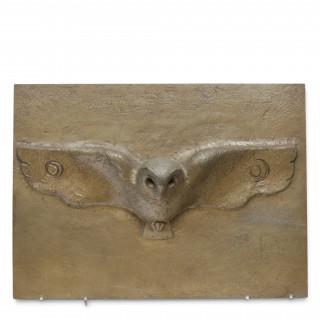
De ogen ingeschilderd.
h. 49,5 cm, b. 67,5 cm
[1]

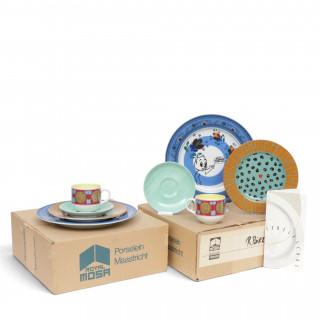
Ontworpen in opdracht van het Museum Fodor ,Amsterdam, uitgevoerd door Koninklijke Mosa BV Maastricht. In een beperkte oplage van 250 sets. In originele verpakking.
diam. 8 - 26 cm
[2]

Zijkant voet met gietersmerk, Bruxelles. Geplaatst op griotte rouge marmeren voet
h. 56,5 - 63 cm
[1]
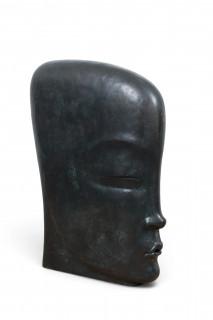
gesigneerd René.
h. 97 x b. 69 x d.18 cm.
[1]

Uit de collectie van Rainer Moddemann
[1]
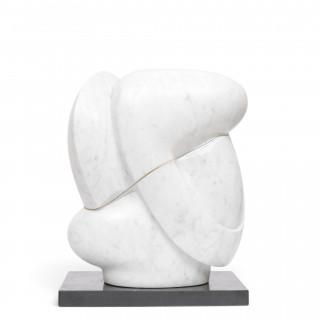
Op losse hard stenen voet.
h 43.5 cm x b. 38 cm x d. 19 cm
[1]
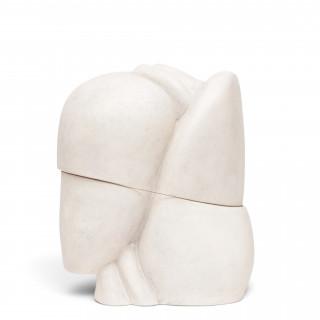
Zijkant gemonogrameerd.
h. 42 cm, b. 33 cm, d. 16 cm
[1]
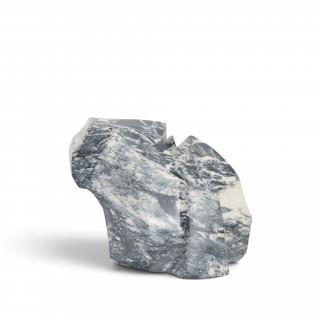
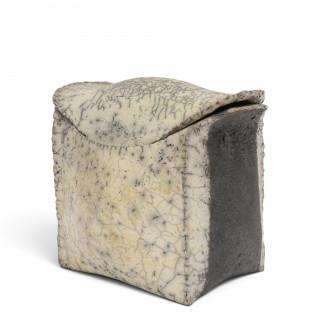
Onderzijde gesigneerd.
h. 16 cm, b. 18,5 cm
[1]
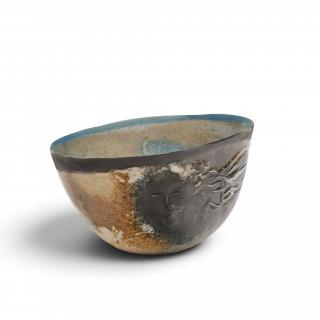
uitgevoerd door Paul Bartels bij de Experimentele Afdeling van de Porceleyne Fles / Delft. Oplage 27/300.
h. 8 cm, diam. 14 cm
[1]

Numbered 0682/1921, complete with hardwood case, booklet, ink, dustcover and carton overbox. (small damage at the end of the clip).
OMAS (an acronym for "Officina Meccanica Armando Simoni") is an Italian manufacturing company of writing implements, founded in 1925. The company was founded by Armando Simoni as "Officina Meccanica Armando Simoni" (abbreviated OMAS), setting up in Bologna. Simoni also designed the tools and equipment needed to manufacturer fountain pens.
[1]

Numbered 910, complete with semi-spheric plexiglass container, booklet and carton overbox.
Omas released the Galileo Galilei model in 1993 in commemoration of the 650th anniversary of the University of Pisa. This pen was "dedicated" to the great Italian scientist, Galileo Galilei.
OMAS (an acronym for "Officina Meccanica Armando Simoni") is an Italian manufacturing company of writing implements, founded in 1925. The company was founded by Armando Simoni as "Officina Meccanica Armando Simoni" (abbreviated OMAS), setting up in Bologna. Simoni also designed the tools and equipment needed to manufacturer fountain pens.
[1]

Numbered 1995. 100 anni di radio 1895-1995. Complete with wooden box, certificate, booklet and carton outherbox.
OMAS (an acronym for "Officina Meccanica Armando Simoni") is an Italian manufacturing company of writing implements, founded in 1925. The company was founded by Armando Simoni as "Officina Meccanica Armando Simoni" (abbreviated OMAS), setting up in Bologna. Simoni also designed the tools and equipment needed to manufacturer fountain pens.
[1]

Numbered 0052. 100 anni di radio 1895-1995. Complete with wooden box, certificate, booklet and carton outherbox.
OMAS (an acronym for "Officina Meccanica Armando Simoni") is an Italian manufacturing company of writing implements, founded in 1925. The company was founded by Armando Simoni as "Officina Meccanica Armando Simoni" (abbreviated OMAS), setting up in Bologna. Simoni also designed the tools and equipment needed to manufacturer fountain pens.
[1]

Heavy sterling silver overlay, Egyptian motifs, marbled blue celluloid. Medium 18ct two-tone gold nib. Complete with presentation box, certificate, booklet and carton outher box. (a piece has broken off from the pen holder in the pyramid).
This exceptional Montegrappa Luxor Red Sea fountain pen draws its inspiration from ancient Egypt, blending historical symbolism with Italian craftsmanship. The body is crafted from richly marbled red celluloid, a material chosen for its depth, warmth, and visual intensity, evoking the hues of the Red Sea and ceremonial pigments of antiquity.
The sterling silver overlay is intricately engraved with Egyptian motifs, including hieroglyphic elements and sculptural details that reference ritual objects and sacred iconography. A striking serpent-shaped pocket clip, set with vivid purple gemstones for the eyes, completes the design—an unmistakable symbol of protection, power, and eternity in ancient Egyptian culture.
[1]

Complete with presentation case, fifteen cases and carton outher cases, booklets and certificates.
Available in the types of wood: Cocobolo, Lignum Vitae, Amboina, Thuya, 1995. Maple, Amarante, Boxwood, Pau Violeto, 1996. Violet Ebony, Myrtle, Pernambuco, Yew, 1997.
OMAS (an acronym for "Officina Meccanica Armando Simoni") is an Italian manufacturing company of writing implements, founded in 1925. The company was founded by Armando Simoni as "Officina Meccanica Armando Simoni" (abbreviated OMAS), setting up in Bologna. Simoni also designed the tools and equipment needed to manufacturer fountain pens.
[15]

The pens are designed by: Claudio Abbado UXE722 - Michelangelo Antonini UXE721 - Rocco Barocco UXE709 - Gianni Berengo Gardin UXE719 - Deborah Campagnoni UXE702 - Manuele Di Centa UXE710 - Fendi UXE712 - Salvatore Fiume UXE717 - Christian Barnard UXE707 - Micol Fontana UXE705 - Marc Giradelli UXE706 - Donatella Girombelli UXE708 - Giorgetto Giugiaro UXE701 - Julio Iglesias UXE714 - Carmen Llera Moravia UXE720 - Gina Lollobrigida UXE715 - Ornella Muti UXE711 - Giuseppe Sinopoli UXE703 - Luciano Soprani UXE718 - Giuseppe Tornatore UXE724 - Nicola Trussardi UXE713 - Uto Ughi UXE707 - Egon von Fürstenberg UXE700 - Gianfranco Ferré UXE716.
In two blue fabric covered cases with each twelve slots. Hereby an extra case with the original box and booklet containing all the designers of this collection.
OMAS (an acronym for "Officina Meccanica Armando Simoni") is an Italian manufacturing company of writing implements, founded in 1925. The company was founded by Armando Simoni as "Officina Meccanica Armando Simoni" (abbreviated OMAS), setting up in Bologna. Simoni also designed the tools and equipment needed to manufacturer fountain pens.
[24]

In Unicef case and carton outherbox. Created by UNICEF to benefit children's literacy programs. Medium 18ct gold nib with UNICEF insignia. Excellent condition, not inked. In blue covered box and carton outher box.
Hereby an extra case with the original box and booklet containing all the designers of this collection.
OMAS (an acronym for "Officina Meccanica Armando Simoni") is an Italian manufacturing company of writing implements, founded in 1925. The company was founded by Armando Simoni as "Officina Meccanica Armando Simoni" (abbreviated OMAS), setting up in Bologna. Simoni also designed the tools and equipment needed to manufacturer fountain pens.
[1]

The pens are designed by: Claudio Abbado UXE722 - Michelangelo Antonini UXE721 - Rocco Barocco UXE709 - Gianni Berengo Gardin UXE719 - Deborah Campagnoni UXE702 - Manuele Di Centa UXE710 - Fendi UXE712 - Salvatore Fiume UXE717 - Christian Barnard UXE707 - Micol Fontana UXE705 - Marc Giradelli UXE706 - Donatella Girombelli UXE708 - Giorgetto Giugiaro UXE701 - Julio Iglesias UXE714 - Carmen Llera Moravia UXE720 - Gina Lollobrigida UXE715 - Ornella Muti UXE711 - Giuseppe Sinopoli UXE703 - Luciano Soprani UXE718 - Giuseppe Tornatore UXE724 - Nicola Trussardi UXE713 - Uto Ughi UXE707 - Egon von Fürstenberg UXE700 - Gianfranco Ferré UXE716.
In two blue fabric covered cases with each twelve slots. Hereby an extra case with the original box and booklet containing all the designers of this collection.
OMAS (an acronym for "Officina Meccanica Armando Simoni") is an Italian manufacturing company of writing implements, founded in 1925. The company was founded by Armando Simoni as "Officina Meccanica Armando Simoni" (abbreviated OMAS), setting up in Bologna. Simoni also designed the tools and equipment needed to manufacturer fountain pens.
[24]

In two cases, with booklet, cloth cover and carton outher case.
OMAS (an acronym for "Officina Meccanica Armando Simoni") is an Italian manufacturing company of writing implements, founded in 1925. The company was founded by Armando Simoni as "Officina Meccanica Armando Simoni" (abbreviated OMAS), setting up in Bologna. Simoni also designed the tools and equipment needed to manufacturer fountain pens.
[3]
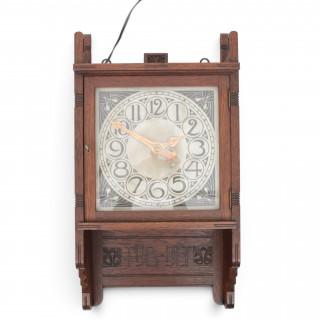
Elektrisch aangedreven uurwerk, verzilverde wijzerplaat met zwart gelakte gestileerde cijfers, roodkoperen wijzers. In geornamenteerde kast met tekst 'Tijd IJlt'.
h. 69,5 cm, b. 37 cm, d. 18 cm
[1]
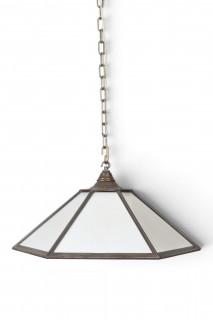
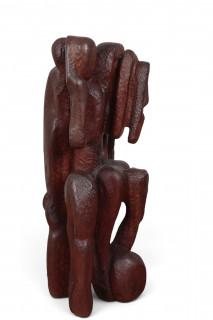
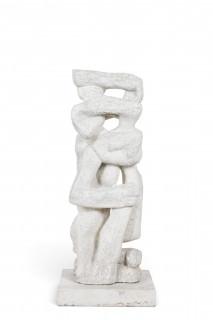
Op langwerpige stenen voet.
h. 104 cm
[1]
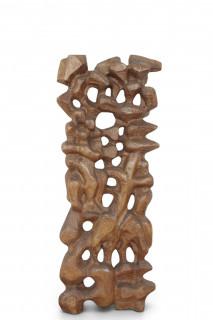
Opengewerkt. Gemonogrameerd.
h. 89 cm
[1]
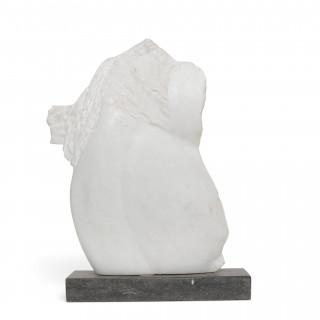
Met horizontale inkepingen. Op zwart hardstenen voet.
h. 52 cm, b. 40 cm
[1]
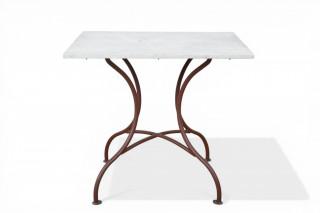
voormalig familie grafsteen
81,5 x 60, h 74 cm
[1]

Compleet met figuurtje. (incompleet, roest).
l. 40 cm
[1]
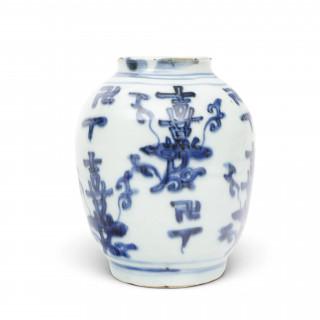
decorated with wan and shou characters among lingzhi, in later Japanese black lacquer box
h. 11 cm
[1]
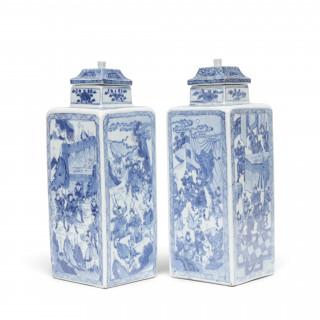
each eight sides of the vases are painted with a scene from the romance about the Yang family, showing generals, female equestrian warriors and celebrations, the bases are marked with an artemisia leaf and the finials have a fu-character (condition report upon request)
h. ca. 31 cm
From the Collection of a Dutch Noble Family
[2]
The historical romance 'Novel about the generals from the Yang family' by Xiong Damu is set during the time of the wars between the Northern Song and its northern neighbours. Most of the stories are about the legendary generals of the Yang family, whose female members play an important part during the wartime. On the present bottles various female warriors and figures are shown.
A pair of similar bottles with a similar story can be found in the Rijksmuseum Amsterdam, no. AK-NM-6698-A.
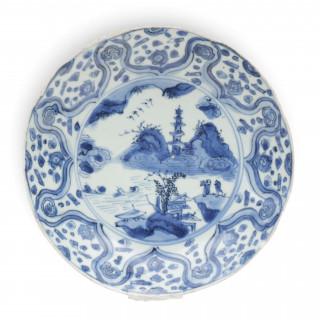
painted with two figures at a riverbank in an extensive riverscape, a pagoda on an island in the background, the rim moulded with panels enclosing ruyi-heads and antiquities, the reverse with two insects and birds perched on branches (small grazed rim chip and minor frits as may be expected)
diam. 20,3 cm
[1]
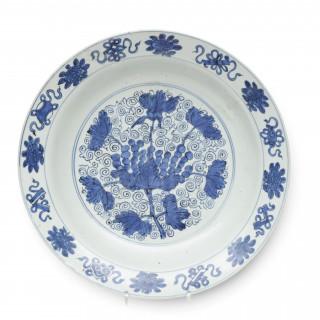
painted with a central grapes design, the rim with buddhist treasures and flowers (large crack to rim with related small damages)
diam. 45 cm
From the collection of Mr. D.H. van Wegen, Amsterdam
[1]
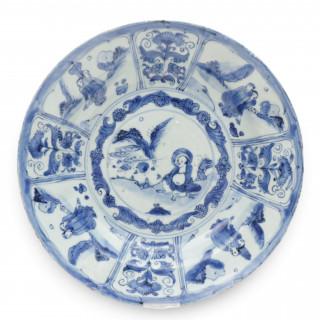
painted to the centre with a figure of Budai seated in a garden, surrounded by panels of figures and stylised flowers (small rim chip and faint related hairline)
diam. 31,5 cm
[1]
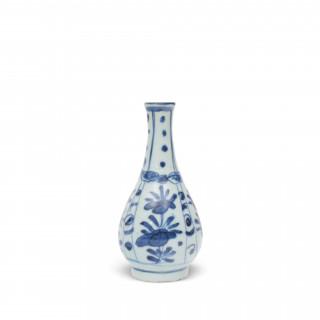
the pear-shaped vase painted with panels of peach
h. 16,5 cm
The Property of a Dutch private collector
[1]
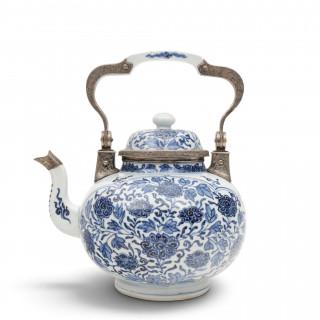
painted with panels of lotus
h. 18 cm
Provenance: from a private Amsterdam estate, collected between the 1960's and 1980's
[1]
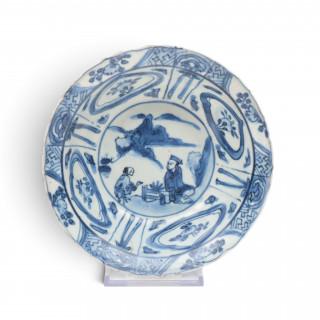
the centre painted with a scholar and acolyte in a mountainous landscape, surrounded by cartouches enclosing peach at the well (footring drilled through, two hairlines)
diam. 14 cm
[1]
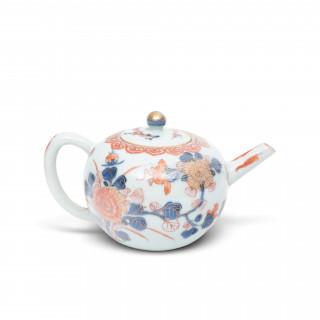
of bulbous shape and painted with chrysanthemum and peony
h. 10 cm
Provenance: from a private Amsterdam estate, collected between the 1960's and 1980's
[1]
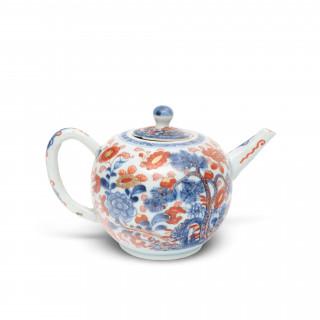
painted with willow and peony and overdecorated in iron-red enamels and gilt with various flowers (small chips to rim of cover and nick to tip of spout)
h. 12 cm
Provenance: from a private Amsterdam estate, collected between the 1960's and 1980's
[1]
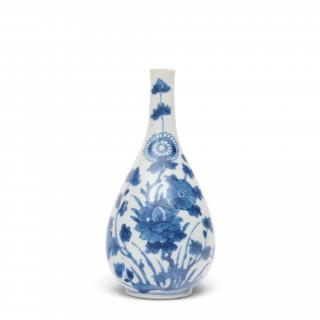
the pear-shaped vase painted with lotus and chrysanthemum
h. 14,6 cm
The Property of a Dutch private collector
[1]
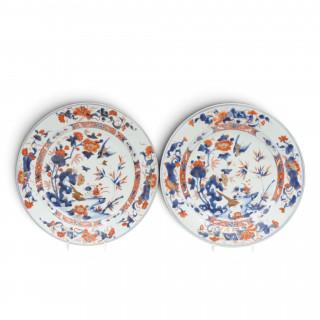
each painted with a pheasant, a bird and butterflies in a garden with bamboo and peony, the rim with clusters of flowers and antiquities
diam. 38,5 cm
Provenance: from a private Amsterdam estate, collected between the 1960's and 1980's
[2]
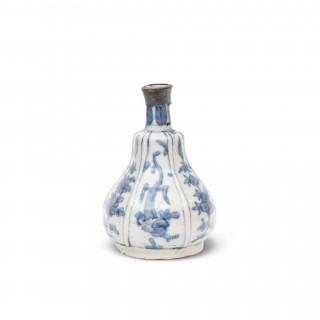
decorated with upright panels enclosing chilong and flowers (neck reduced)
h. 18,5 cm
[1]
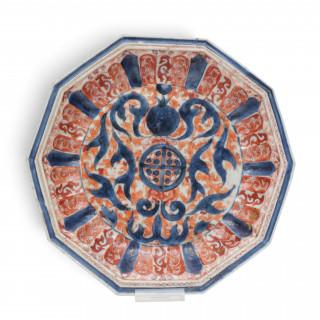
painted with a central symbol surmounted by a pomegranate within a fluted border (rubbing to gilt)
diam. 23 cm
[1]
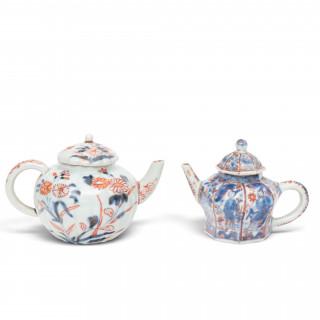
one of ribbed bulbous shape decorated with flowers and the other of octagonal shape painted with ladies in a garden and overdecorated in iron-red enamels and gilt with flowers
h. 9 cm
Provenance: from a private Amsterdam estate, collected between the 1960's and 1980's
[2]
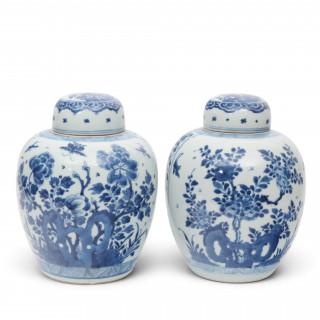
the oviform sides painted with birds and butterflies in a rocky flower-garden (one cover with reglued chip and related forked hairline, the other cover with a forked hairline)
h. 26 cm
The Property of a Dutch private collector
[2]
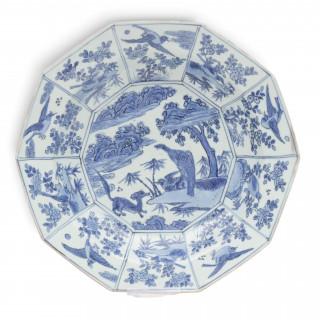
the centre painted with a bird of prey holding a duck while a fox is approaching, the rim with panels of flying and seated birds among flowers (small reglued rim chip with related hairline)
diam. 31,5 cm
Compare a similar dish in the collection of the Topkapi Palace, Istanbul, nr 1340 (illustrated)
[1]
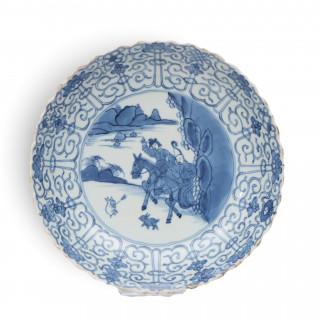
painted with two equestrians armed with bow and arrow pursuing a rabbit and deer, the border with lotus and buddhist symbols, the base with an apocryphal Chenghua mark (fritted rim)
diam. 22,5 cm
[1]
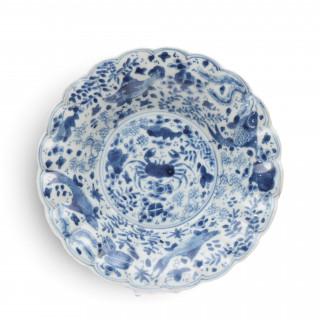
painted with a central crab surrounded by fish and waterweeds, the base with stylised mark (grazed rim chip, small chip to standring, minor frits and nicks)
diam. 20,5 cm
[1]
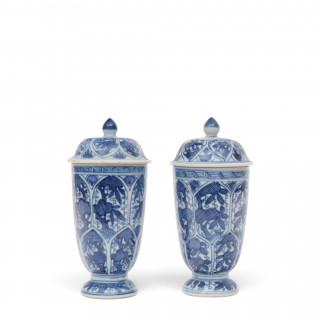
painted in hatched lines with stylised floral patterns in two rows of panels
h. 15,5 cm
[2]