
 Back to catalogue
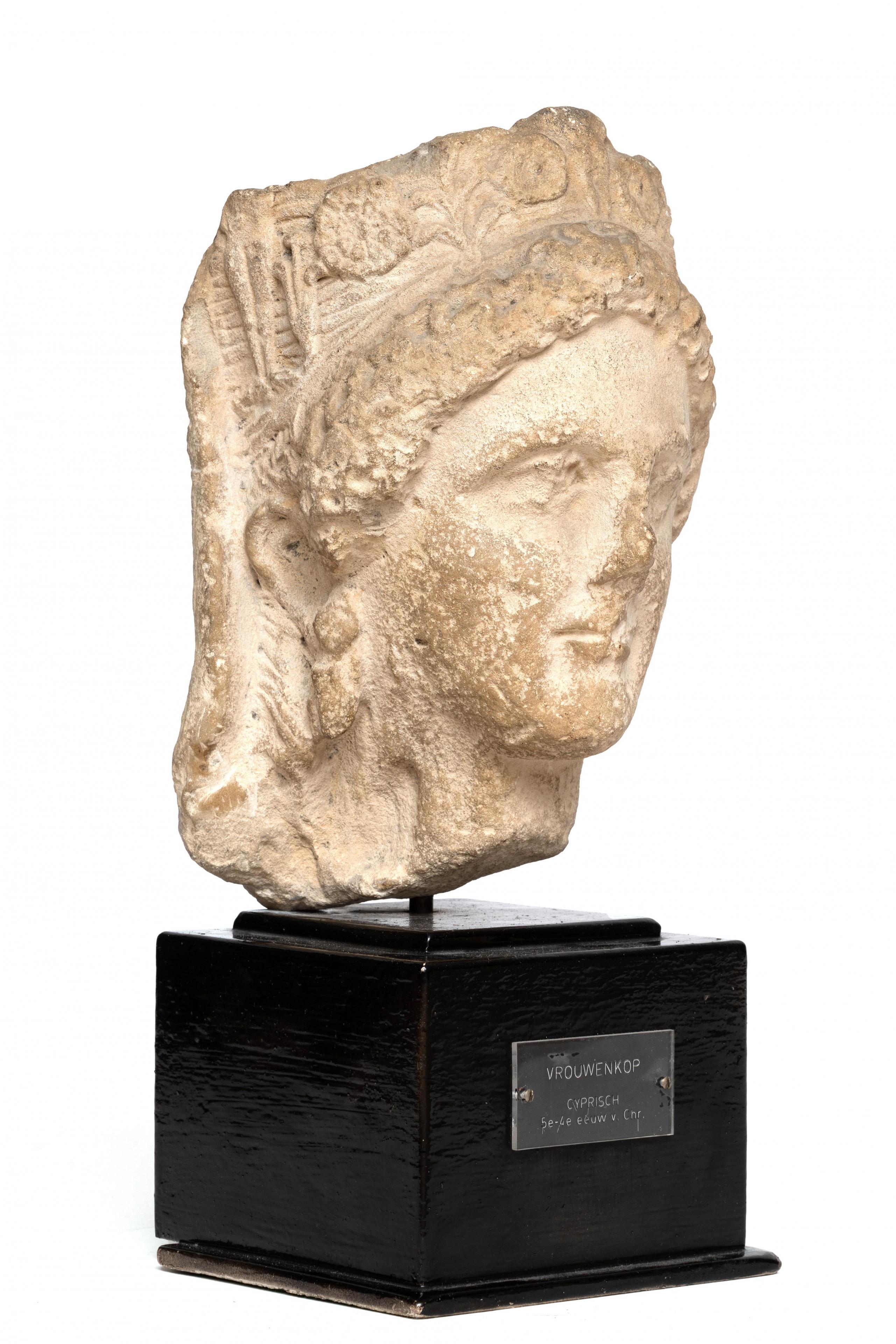

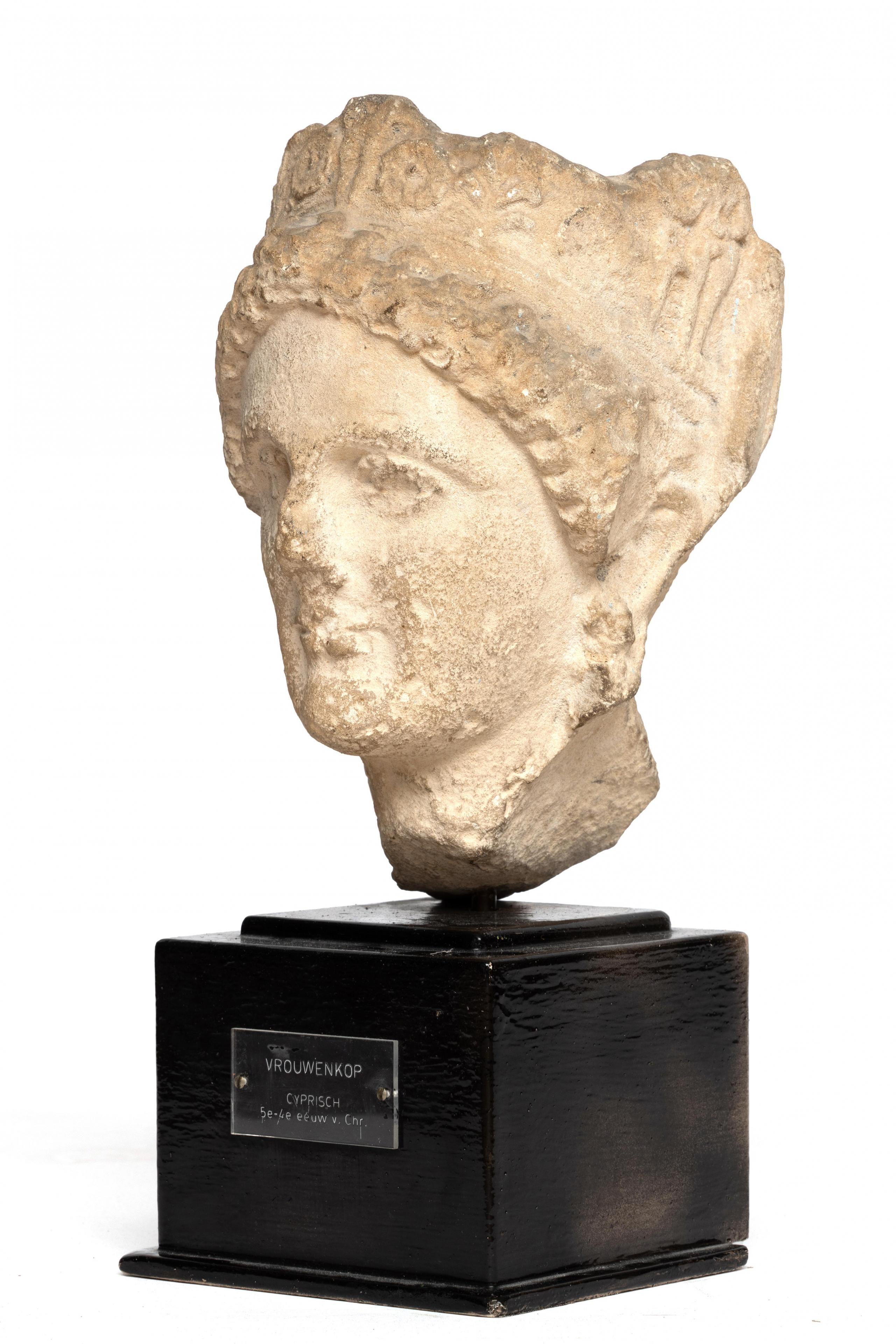
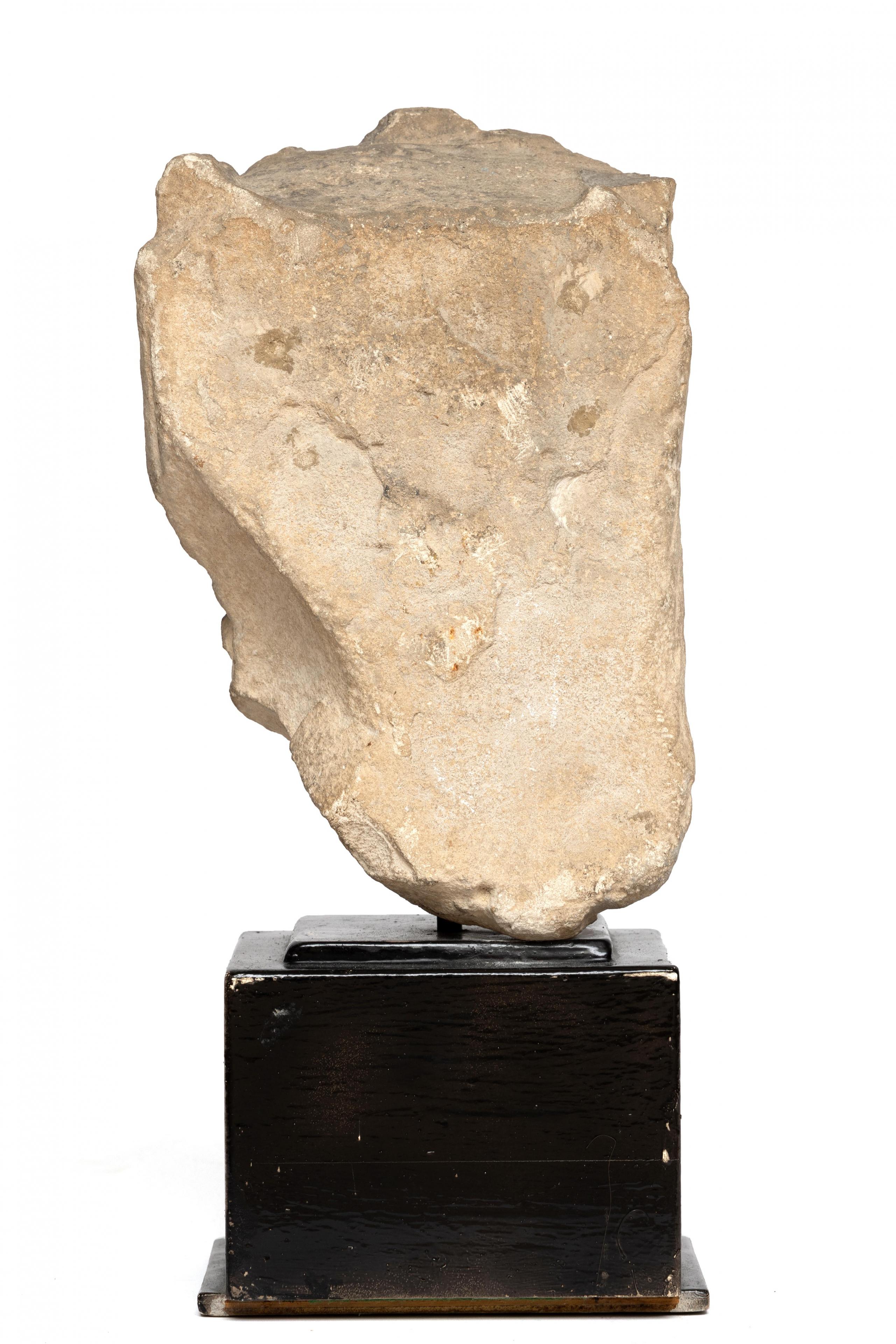
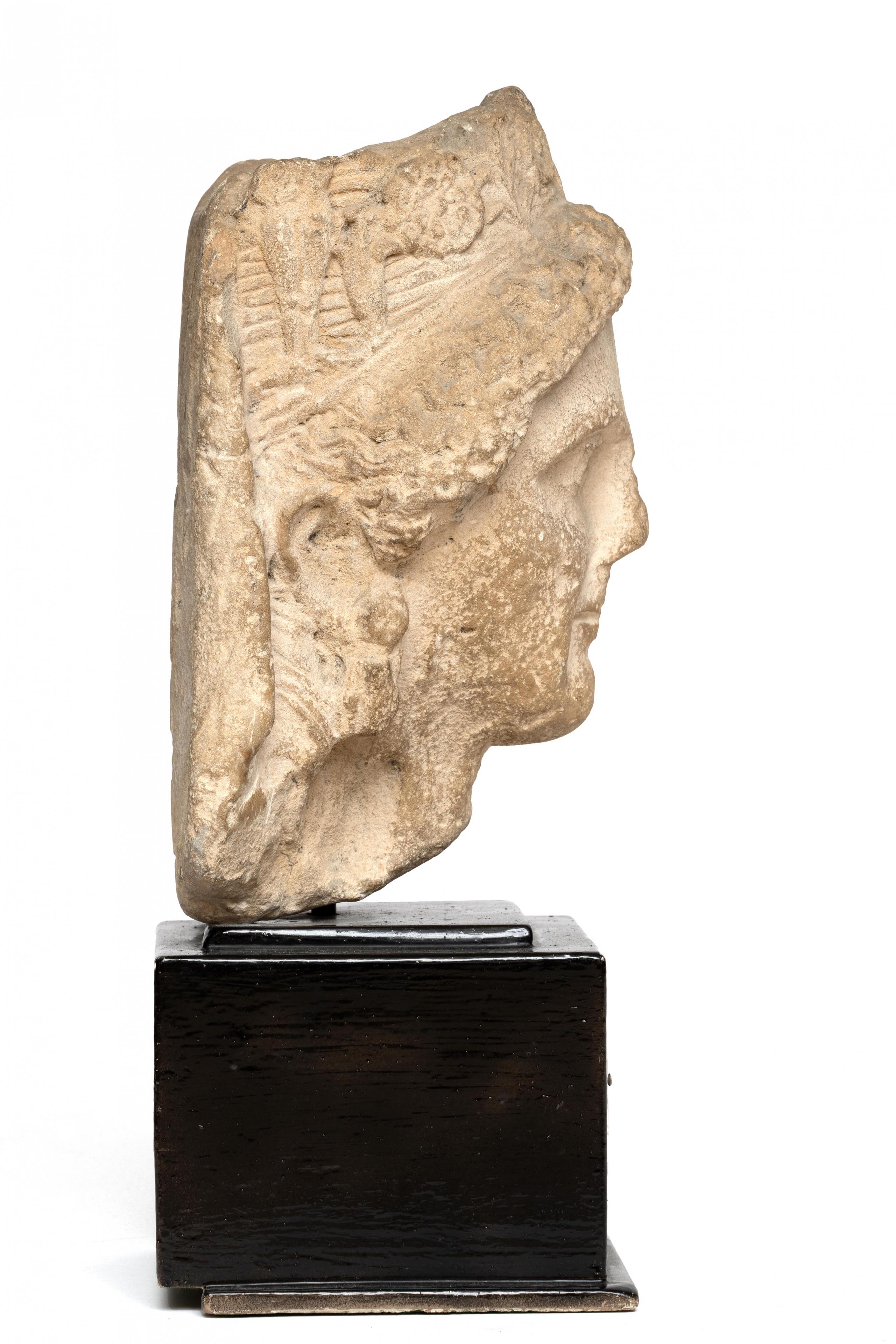

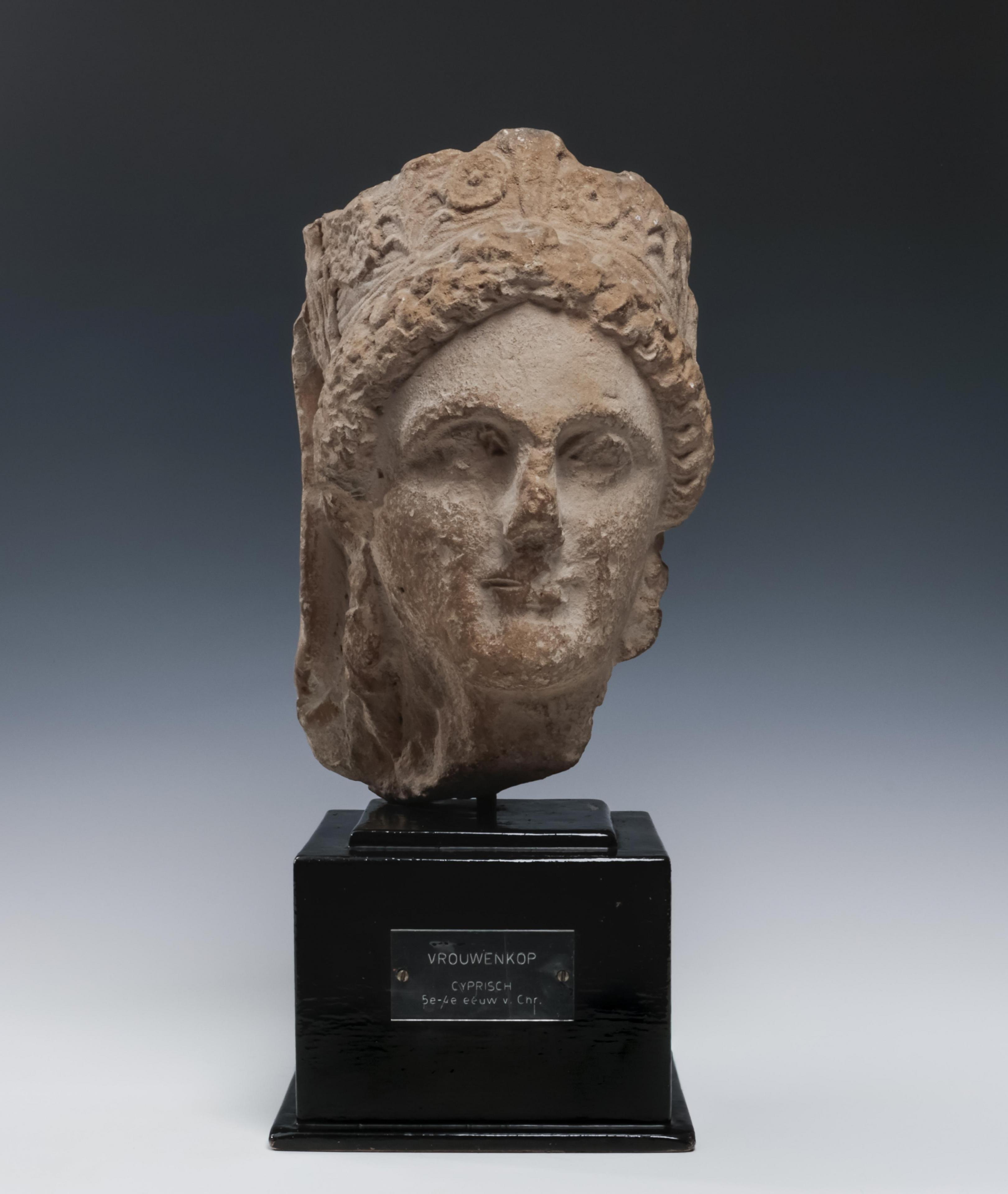
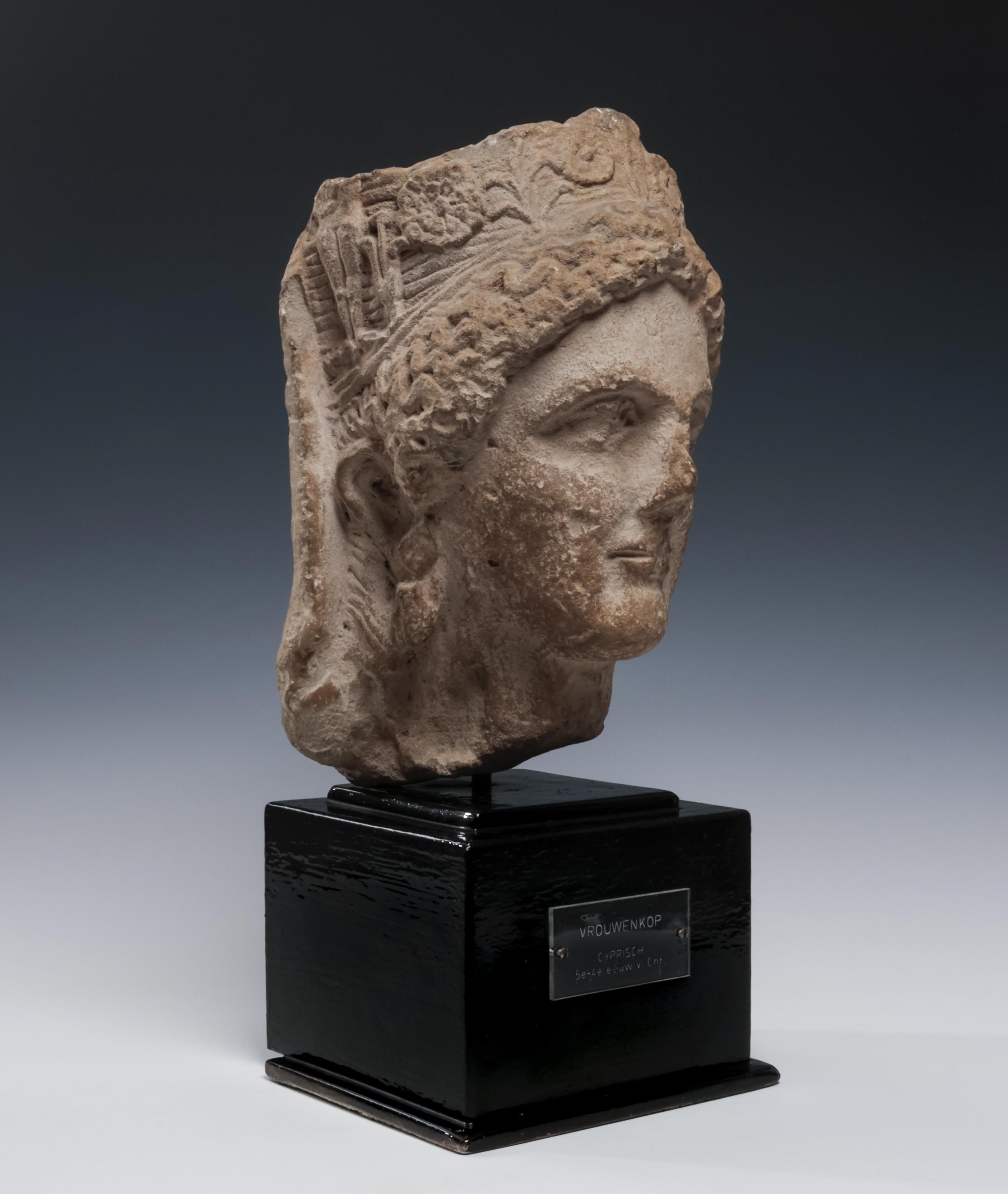
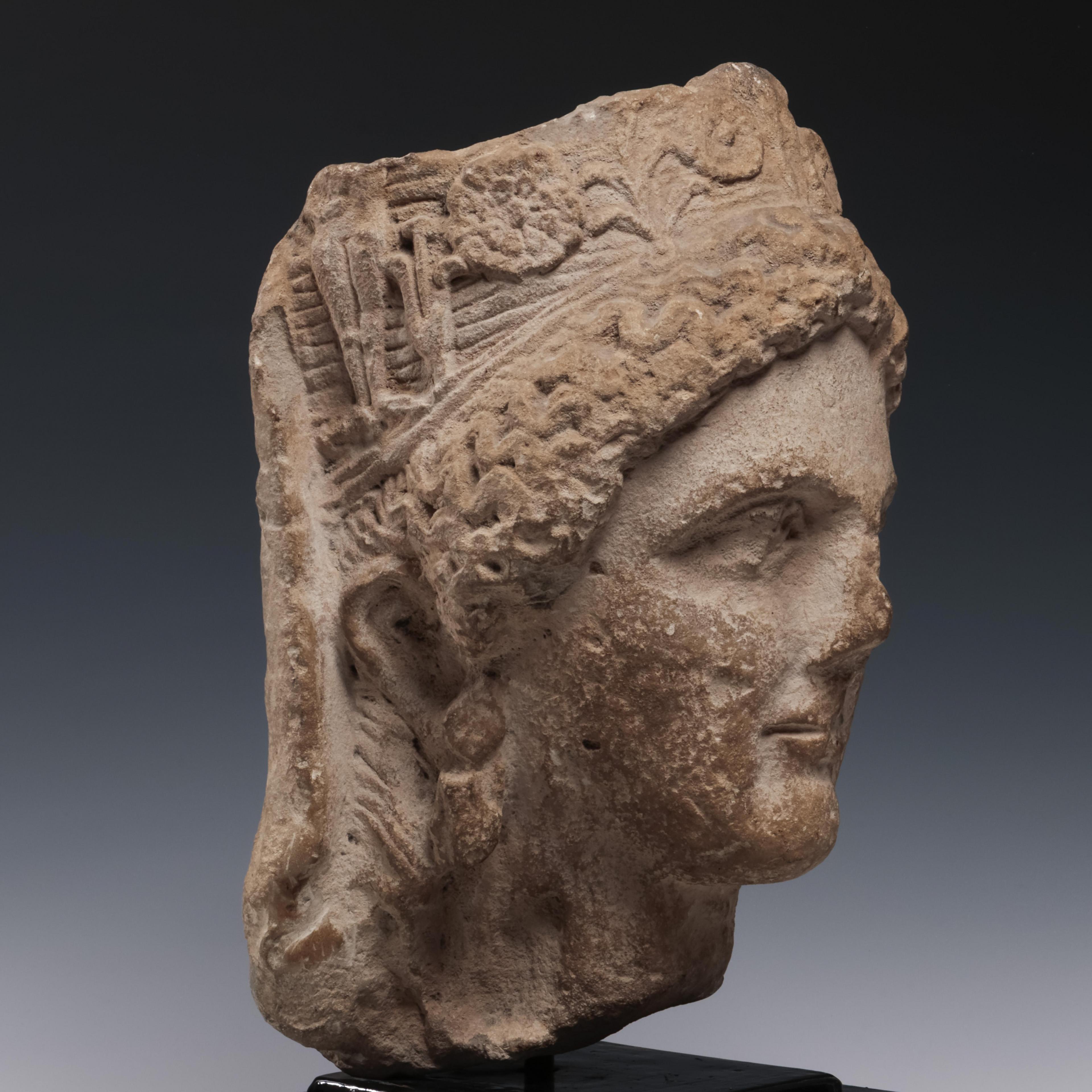
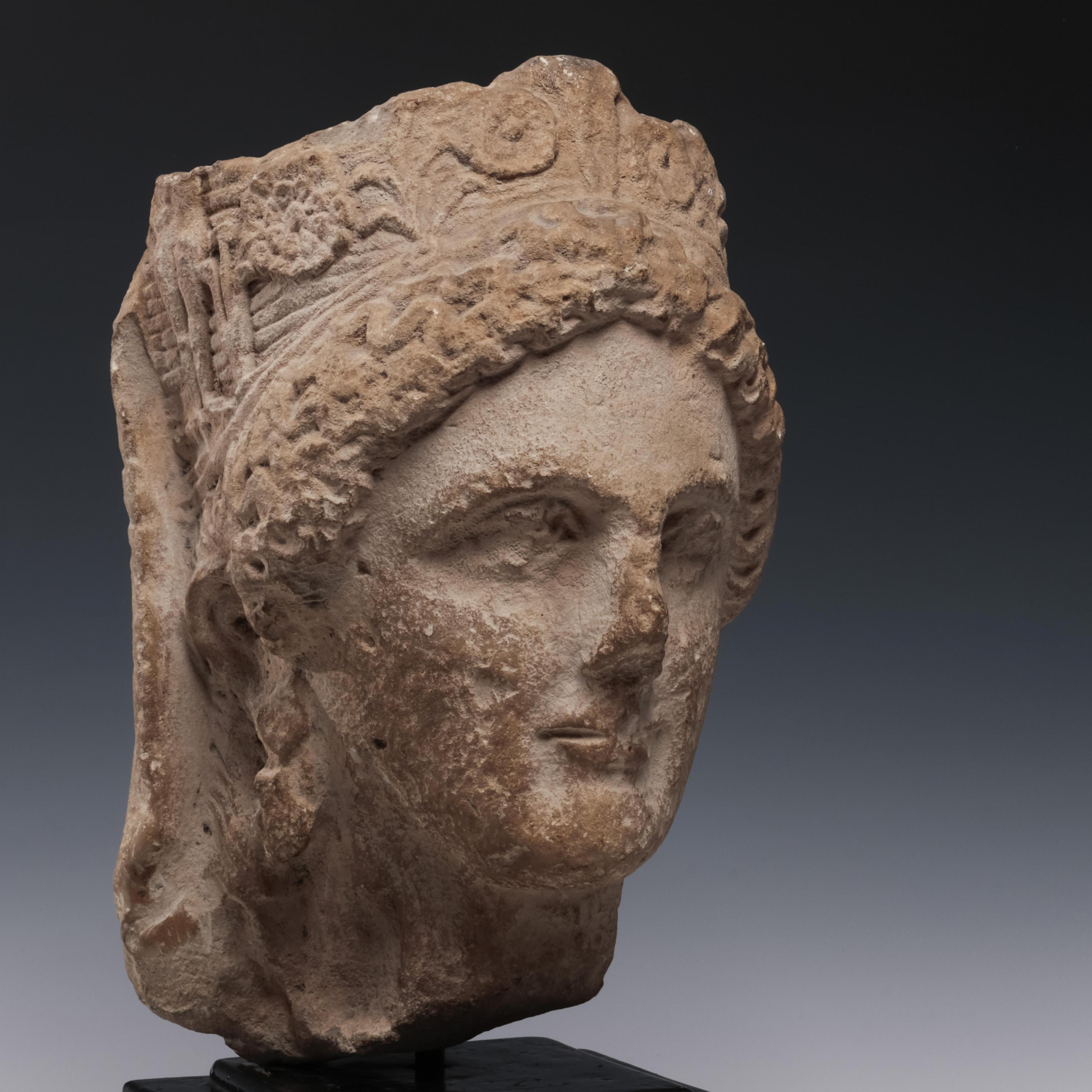
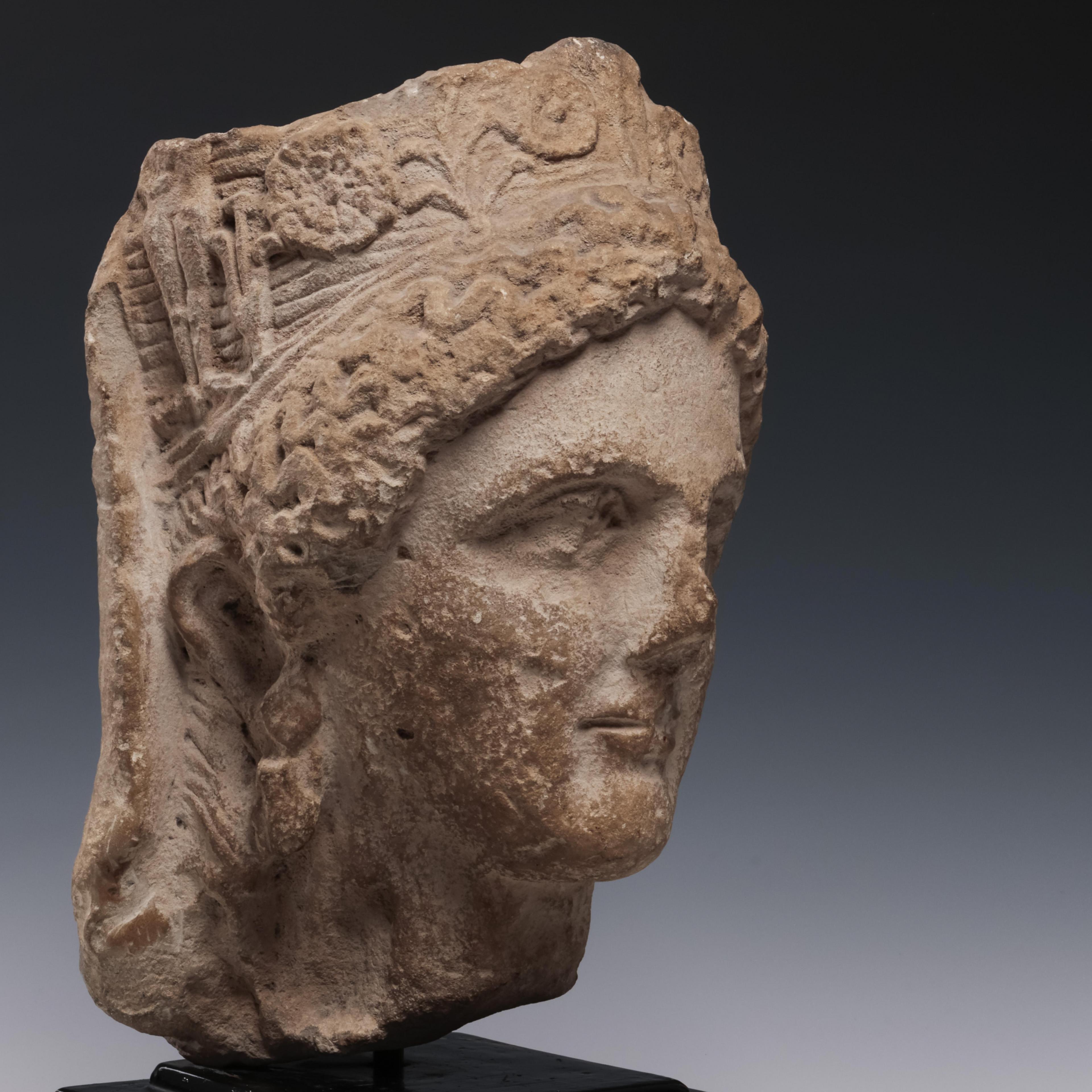

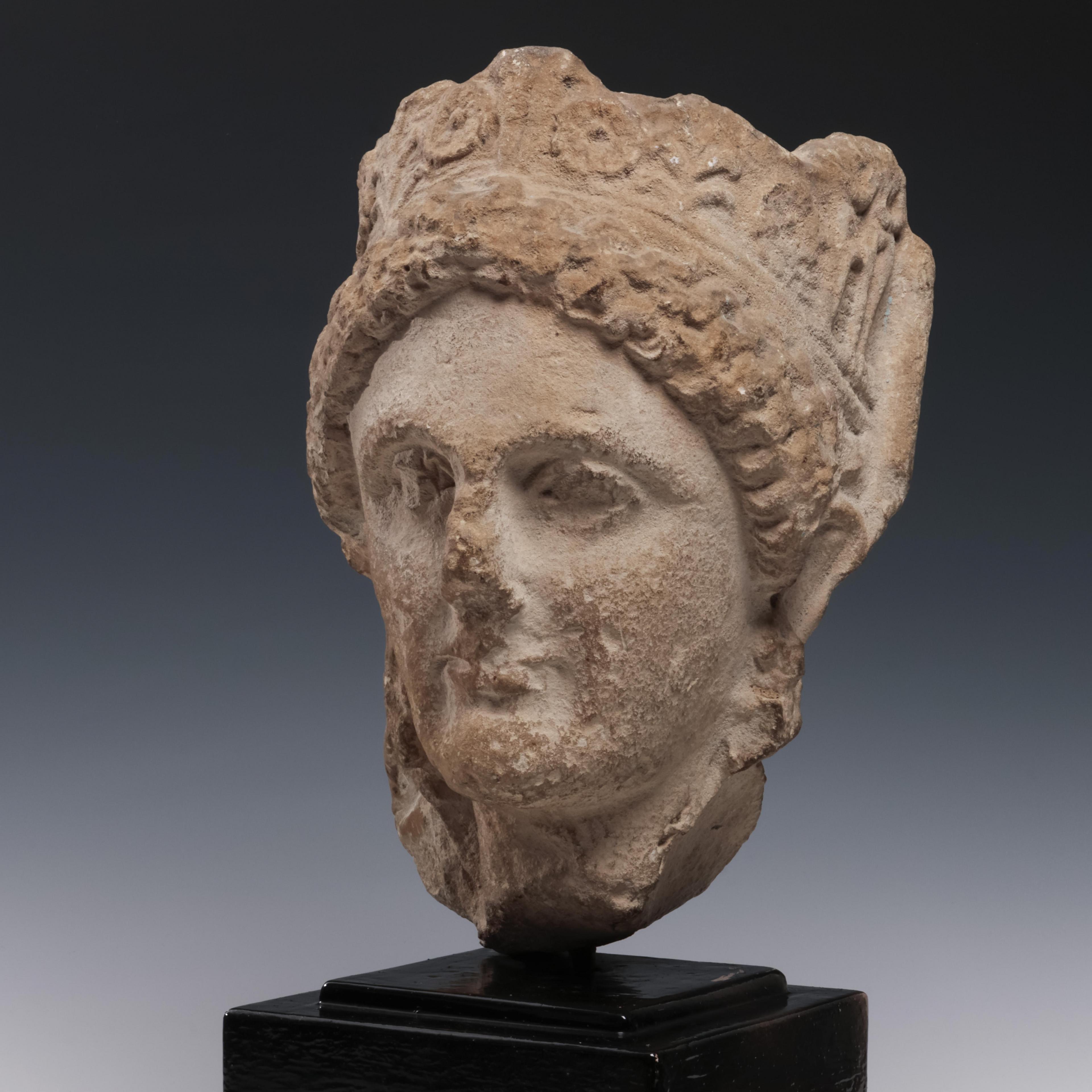

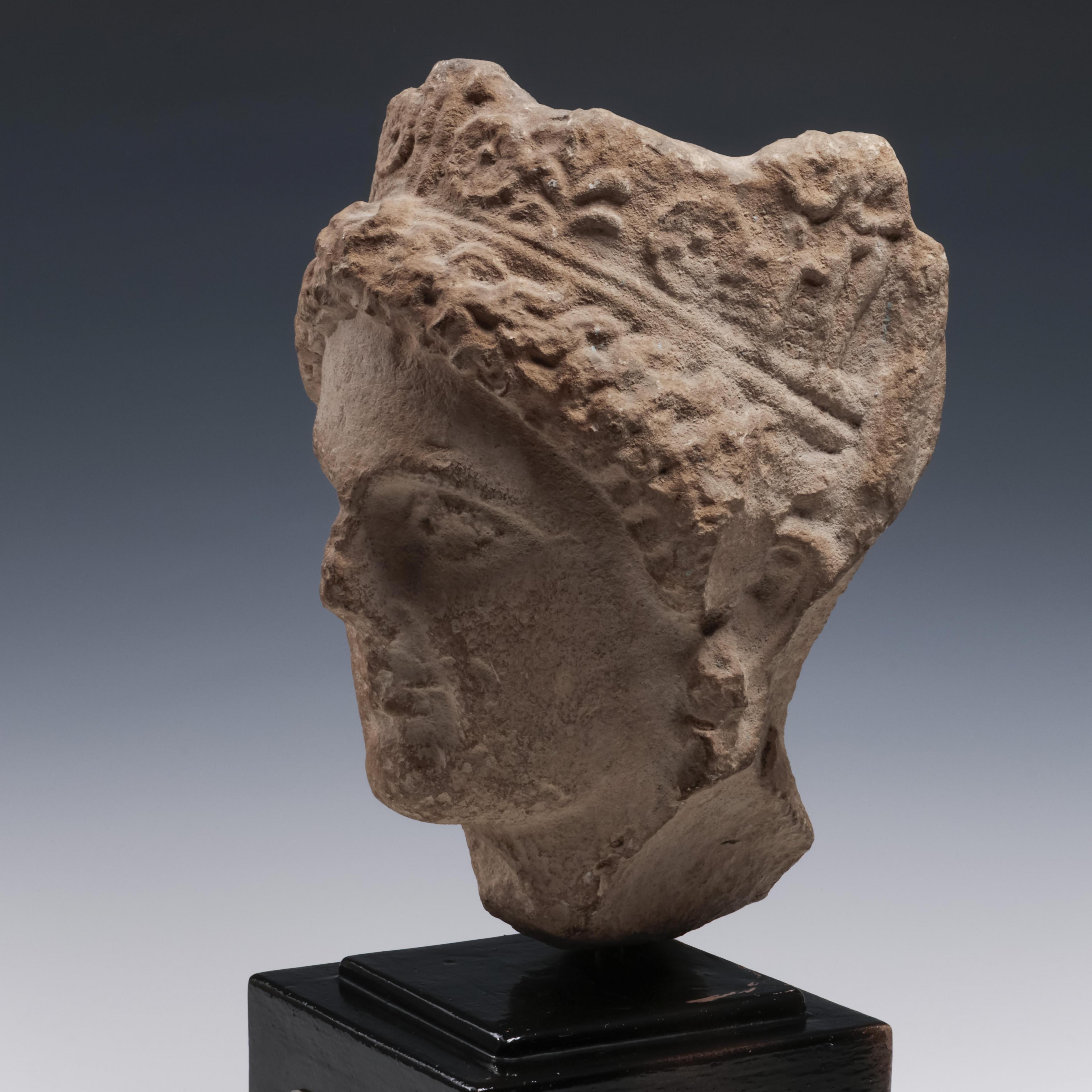
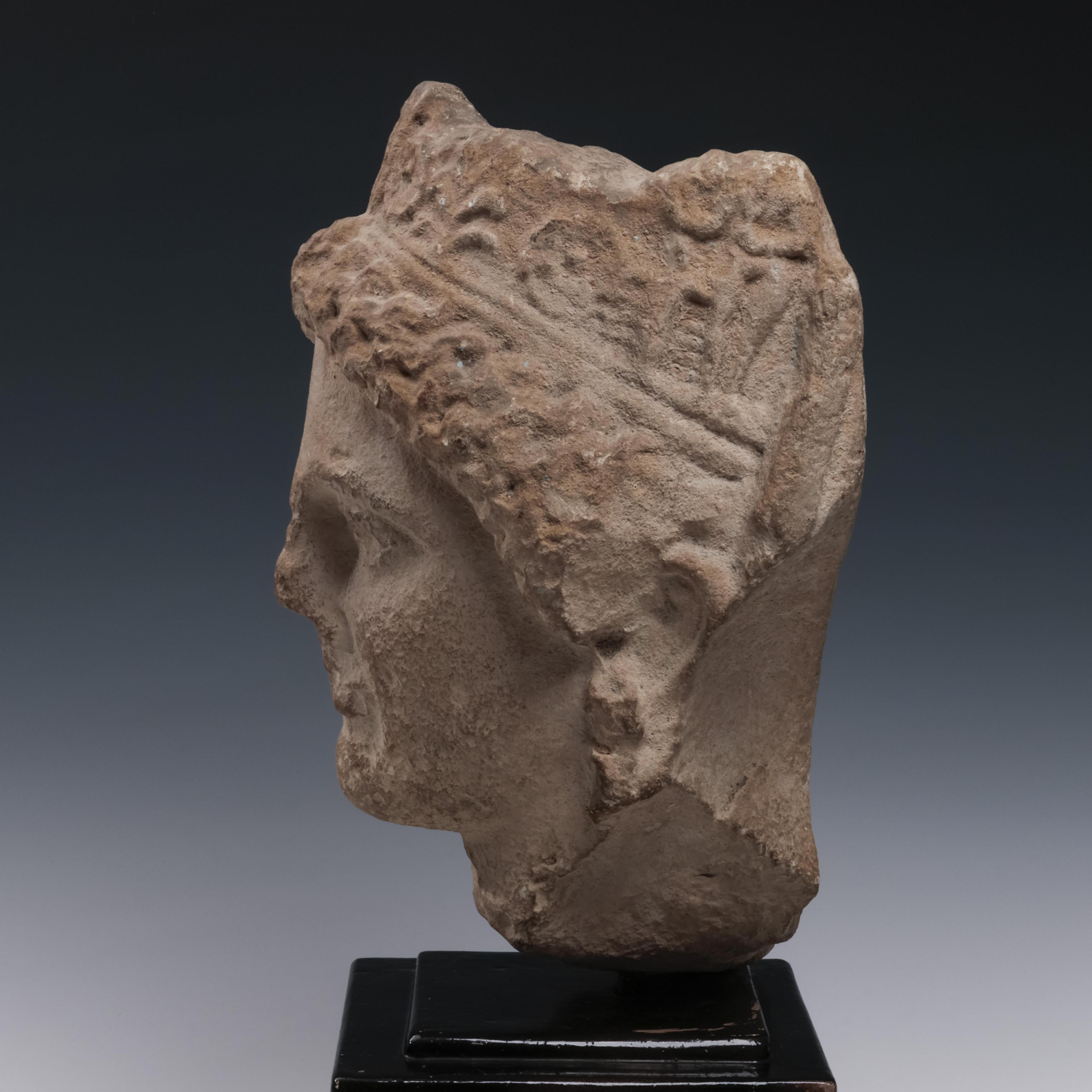

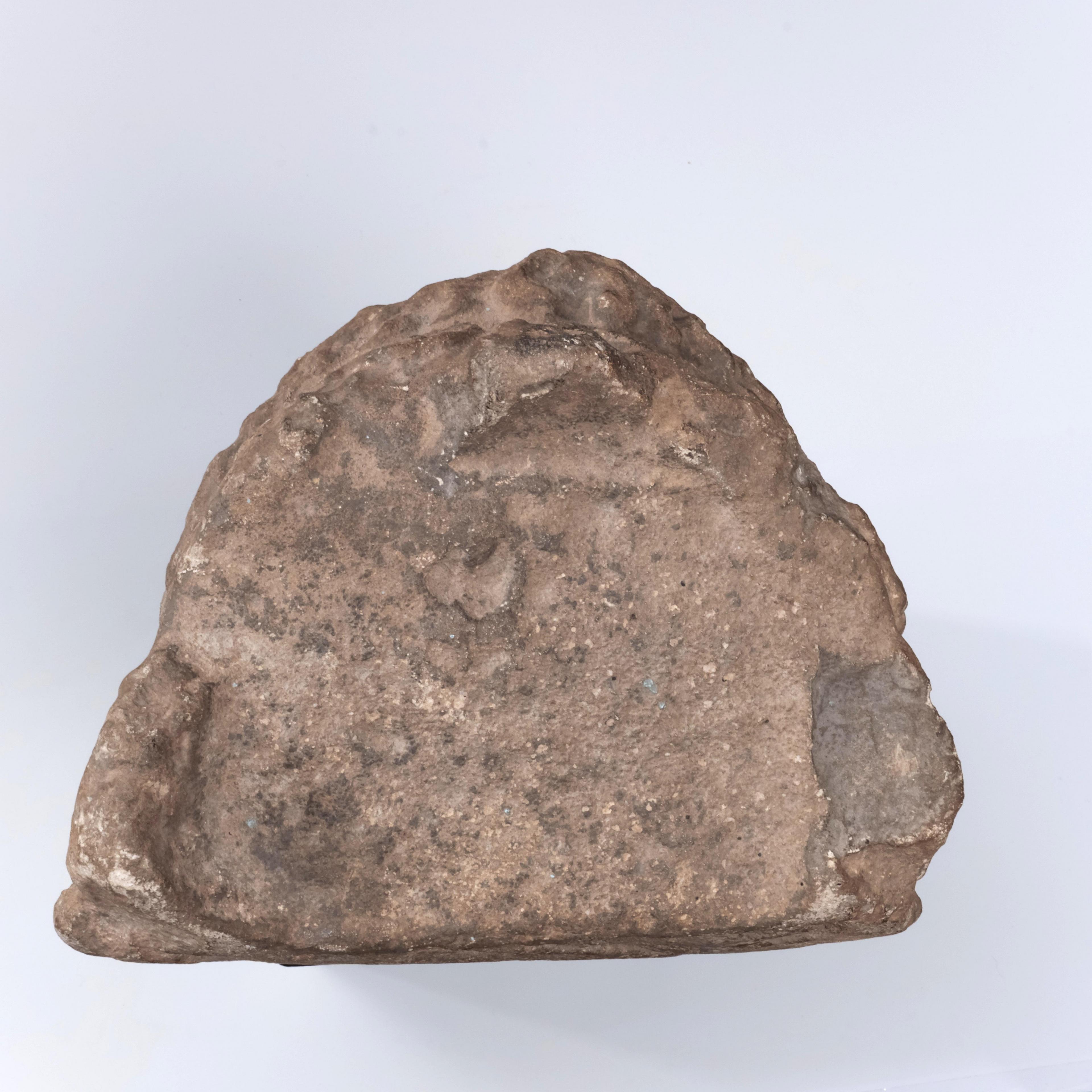
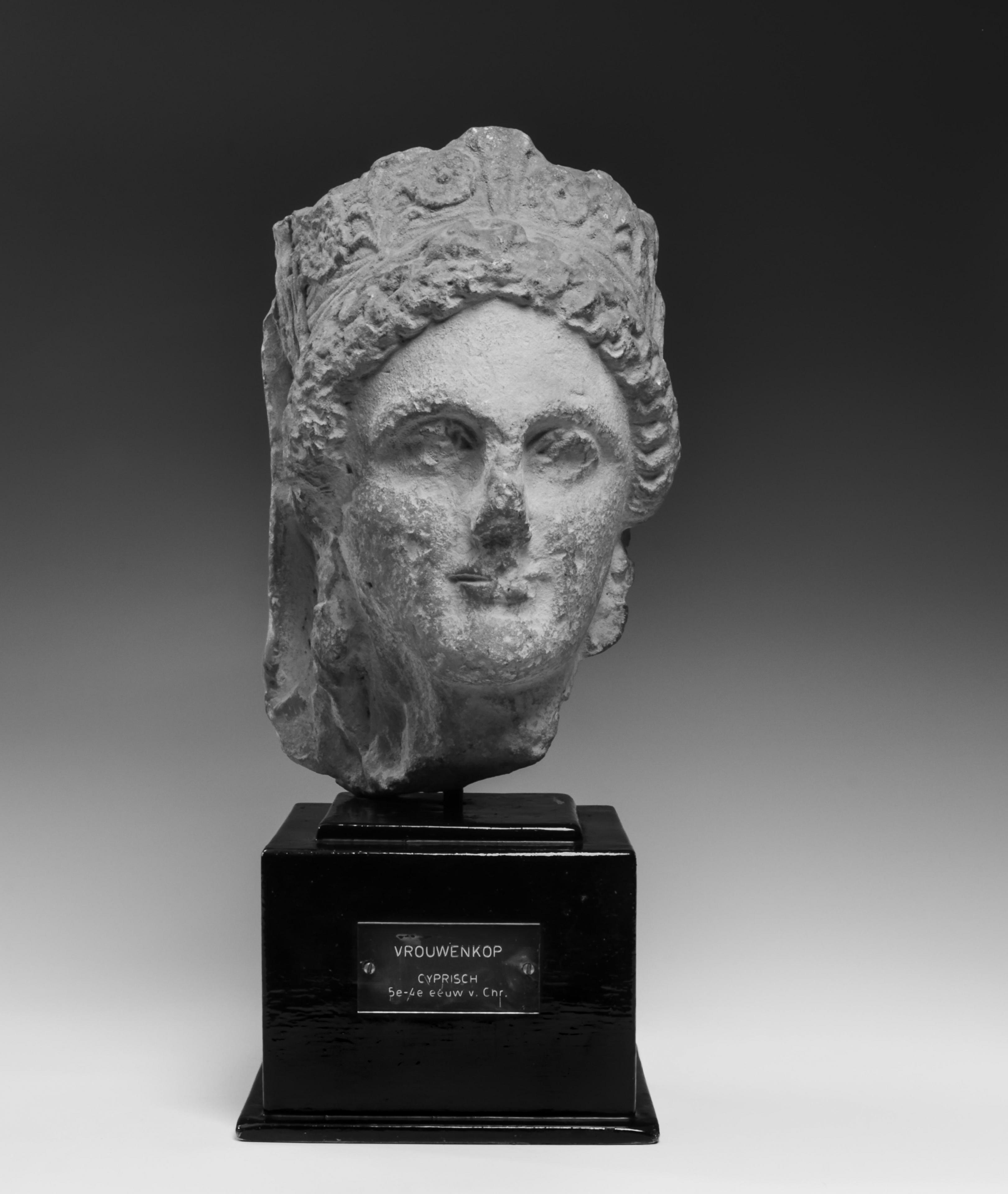
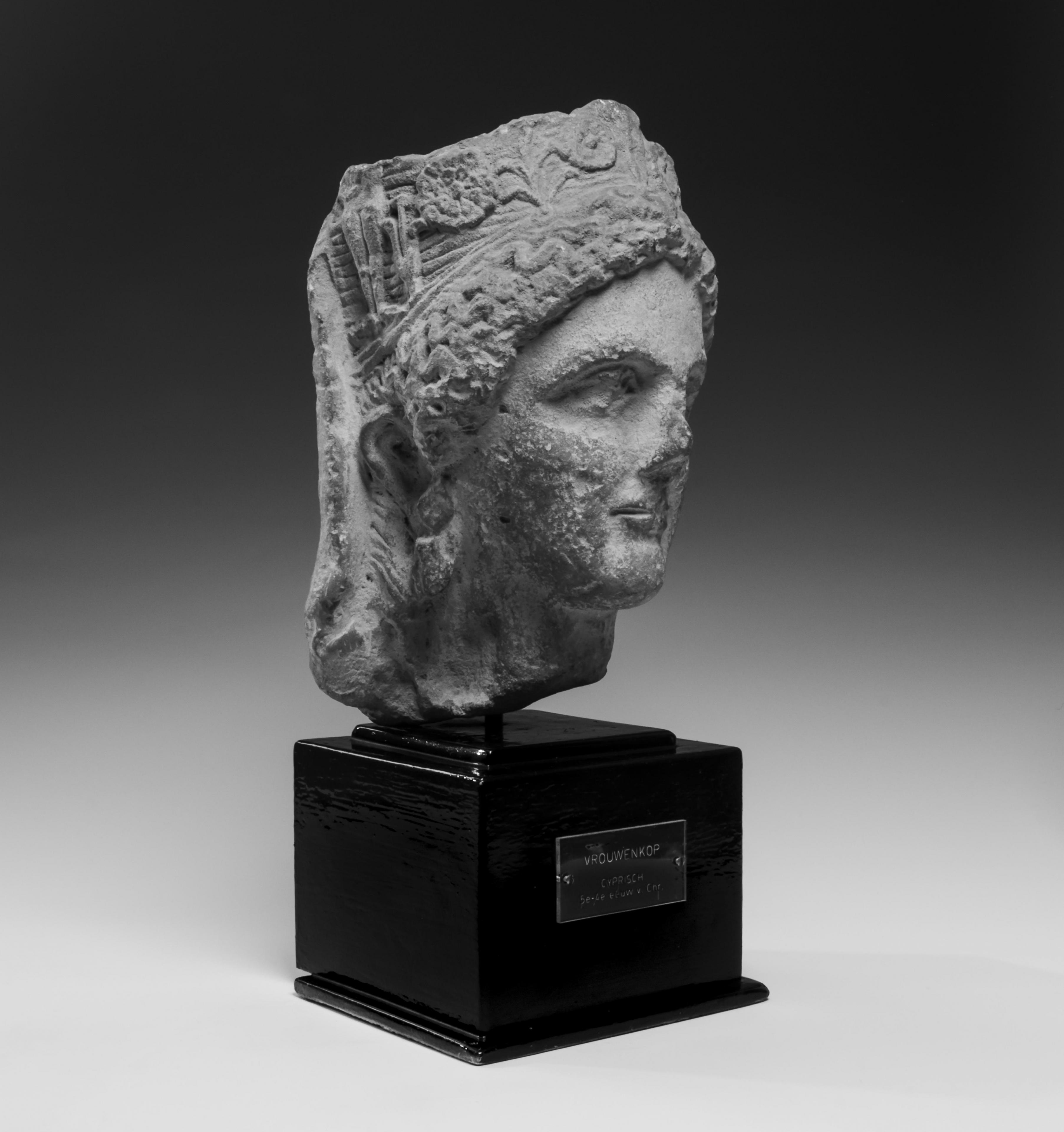
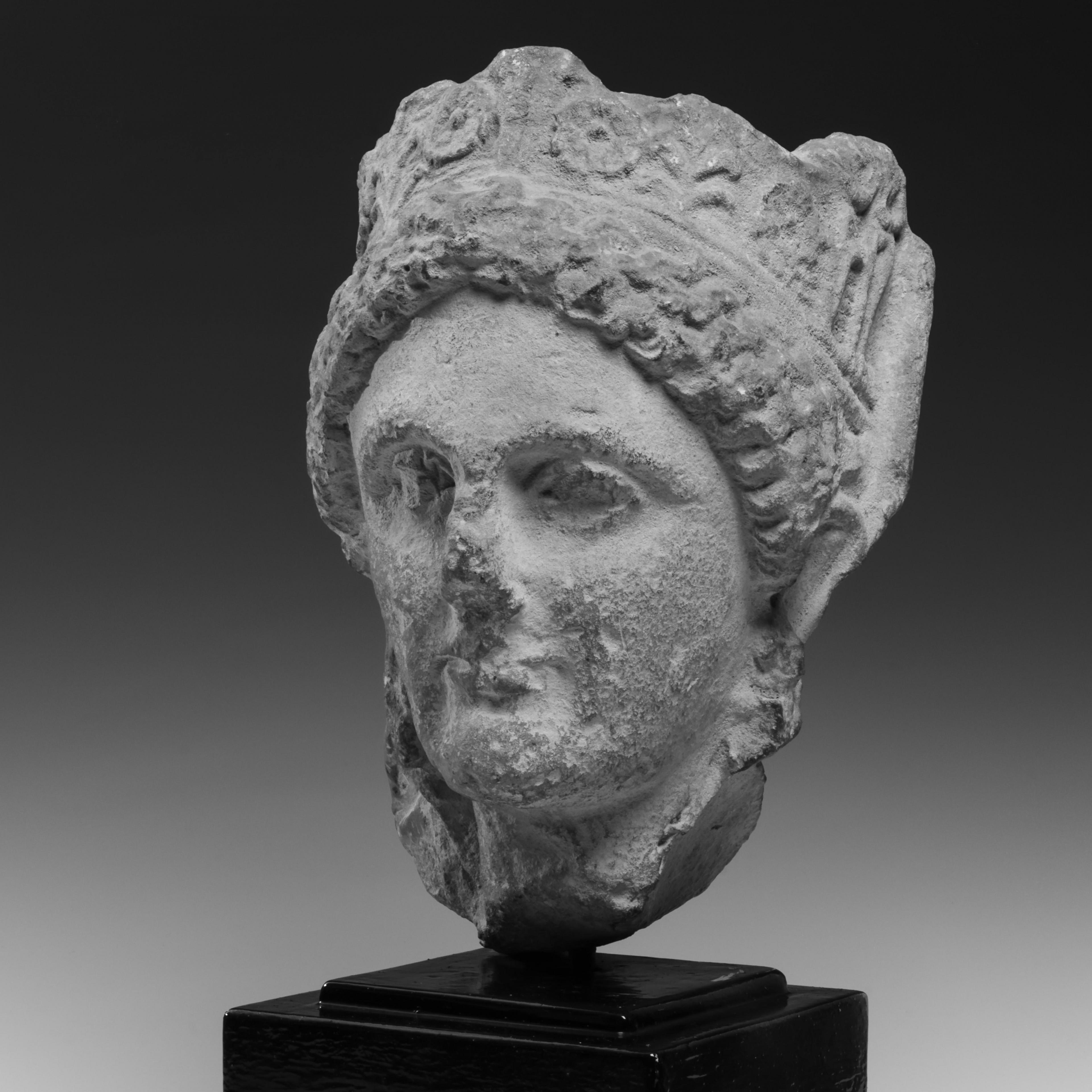
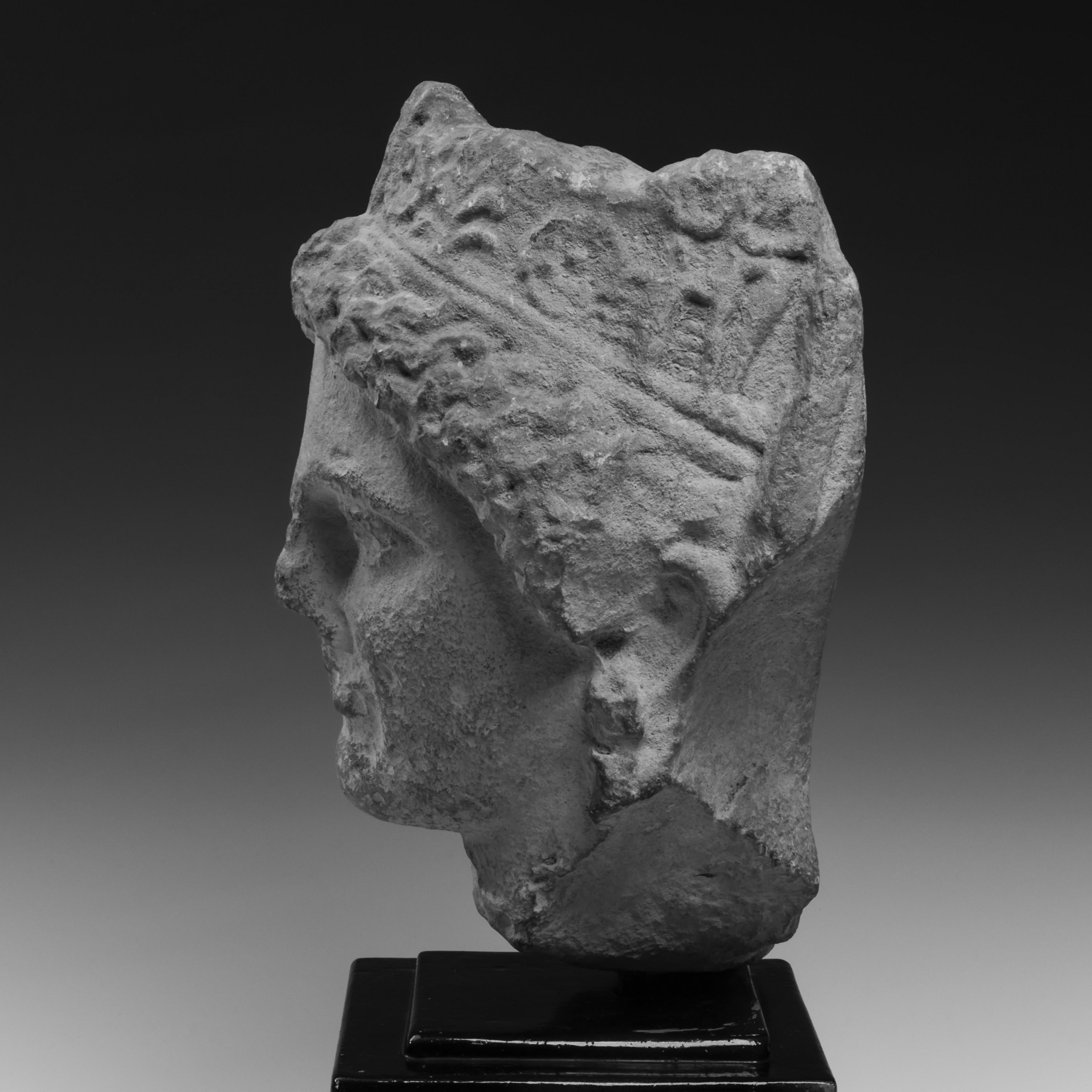
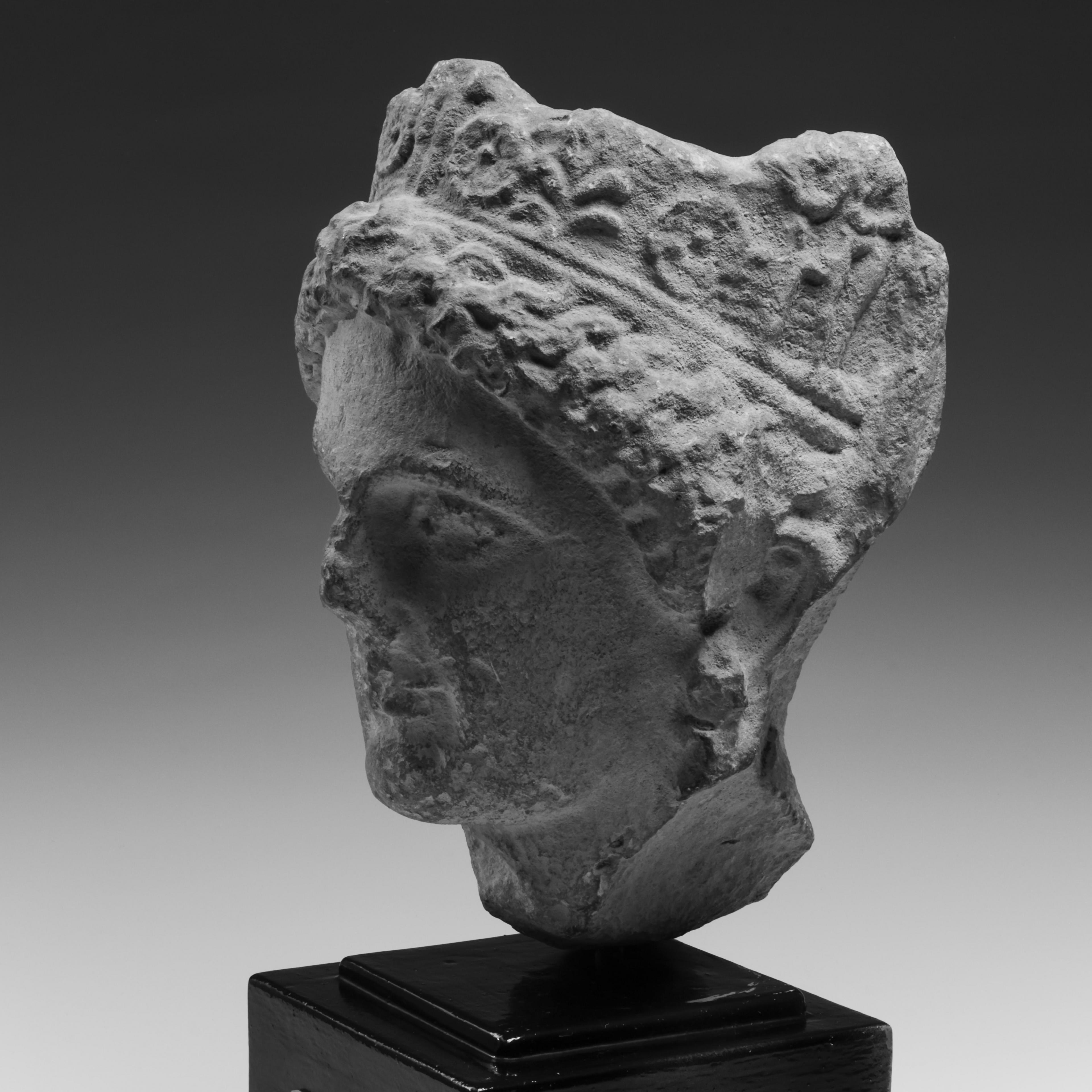

The woman’s head of exceptional size shows an oval face with a subtle smile and a rounded chin. Her big naturalistic eyes, above which her brows are arching, move away from the preceding archaic period, and invite the viewer to gaze at her frontal face. The subtle deviation from the strictly frontal pose, with her head slightly turning to the right, creates a dynamic relationship with the viewer, while maintaining visual engagement. A band of curly hair frames her small forehead, leaving the ears visible on either side of the head. She is wearing elaborate earrings. The woman is wearing a kalathos-shaped headdress, representing a votary/priestess, a deity, or a woman of higher status. The upper part of the kalathos is missing, but the headdress is ornamented with three nude female figures: one at the centre and one at each outer end. Between the central and lateral figures, the decoration consists of an alternating sequence of four rosettes and four foliate ornaments. A veil is attached to the kalathos and falls around the back of the head. The sculpture is damaged at the neck and along the back, where the veil is partially broken away. Sculpture in Cyprus developed largely in connection with religious and civic functions and was closely associated with the construction of temples, palaces, and public buildings. Although the island lacks marble, it is rich in clay and soft limestone, materials that were particularly suitable for sculptural production. Cypriot sculptors learned early on to make effective use of these locally available resources (Spiteris 1970, 180). Already during the Neolithic period, alongside stone idols, evidence appears for the early development of clay and limestone working and the emergence of skilled artisans (Spiteris 1970, 182). By the seventh century BCE, these developments had contributed to highly sophisticated techniques in monumental sculpture. Sustained contact with Cyprus’s eastern neighbours, as well as their presence on the island from the seventh century onward, played an important role in the transmission of artistic knowledge and ideas. The limited availability of hard stone presented a particular technical challenge. The soft limestone found on Cyprus is susceptible to deterioration when exposed to moisture, requiring sculptors to adapt their methods to the properties of the material. They generally worked in a relatively flat manner,limiting the number of carving stages while efficiently exploiting the broad front and back surfaces of the stone (Spiteris 1970, 184).
h. 31,7 ; w. 20 and d. 18 cm. on a custom black painted wooden stand.
Provenance: Private Dutch collection early 1970's. Private Haarlem collection, inherited by descent. Published Rijksmuseum van Oudheden. Klassieke kunst uit particulier bezit: Nederlandse verzamelingen 1575–1975. Tentoonstellingscatalogus nr. 10. Leiden: Rijksmuseum van Oudheden, 1975, cat. 57. Exhibited Rijksmuseum van Oudheden, 1975, Leiden Amsterdam.
[1]
